Case Study
What evidence should we send when the Home Office asks why we need more undefined CoS?
By Sponsor ComplIANS · 11 April 2026 · 14 min read
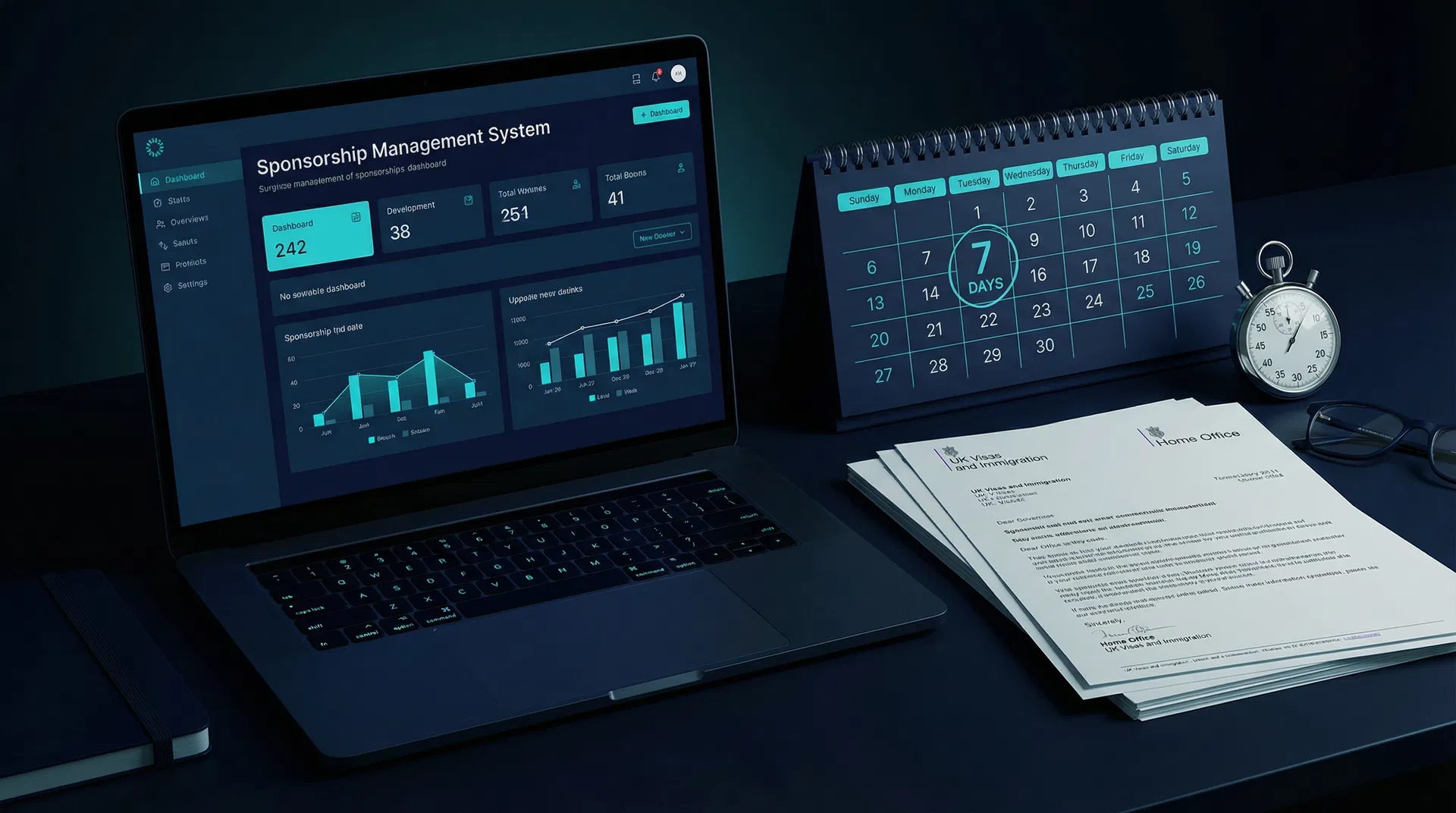
When the Home Office asks why you need more undefined Certificates of Sponsorship, answer the question with a clear worker schedule, a documented business need and records that agree with the proposed roles. Explain each requested CoS separately. Check contracts, pay, hours, recruitment evidence and right-to-work records before submitting the response.
Start with the allocation request itself
An undefined CoS is assigned from the sponsor's annual allocation. If the allocation is insufficient during the CoS year, the sponsor can request an increase through the Sponsor Management System. Sponsor Guidance Part 2, paragraph S2.22 says the sponsor must give reasons for the request and that the Home Office may ask for evidence.
The response should therefore make the requested number understandable. Use a table that identifies the role, occupation code, salary, weekly hours, work location, proposed worker and reason the role is needed. If the request covers several workers, do not rely on one general paragraph for all of them.
Explain the genuine business need
Set out what the organisation delivers, how staffing is currently arranged and why the proposed sponsored roles are needed. Keep the explanation tied to records the Home Office can check. Suitable evidence may include current contracts for services, commissioned hours, rotas, workforce schedules and recruitment records.
Do not use urgency as a substitute for evidence. A visa expiry or staffing pressure explains timing, but it does not prove that the role is genuine or that the sponsor can meet its duties.
Check each proposed role before relying on it
Sponsor Guidance Part 2, paragraph S1.17 says a sponsor must check that the role is eligible, the worker will be paid appropriately, the worker is eligible and any other route requirements are met before assigning a CoS. The allocation response should not assume those points. It should show that the sponsor has checked them.
Compare the proposed job title and duties with the selected occupation code. Confirm the salary and hours. Check that the work location is recorded accurately. If the organisation's documents describe different roles, dates or pay, resolve the discrepancy before sending them.
Build an evidence pack that can be followed
Appendix D, version 08/26, sections 2 and 3 identifies recruitment, payslip, payment and contract evidence that sponsors must retain. Use a numbered index and refer to the document number in each answer. The reviewer should be able to move from the question to the answer and then to the evidence without guessing.
For workers already sponsored, check that the CoS, contract, payroll and payment records agree. For proposed workers, retain the recruitment evidence and written particulars that show how the role was identified and what the person will be paid.
Treat inconsistencies as a separate problem
An allocation request can expose wider sponsor issues. Sponsor Guidance Part 3, paragraphs C7.15 to C7.17 confirm that a compliance check can examine systems and records, request evidence remotely and compare information with other government departments. A response that contains unexplained mismatches can therefore prompt questions beyond the allocation request.
Correct genuine administrative mistakes transparently. Keep the original record, document the correction and explain what control now prevents repetition. Do not alter a record merely to make it agree with another document.
Review before submission
The final review should test three things. First, does every requested CoS have a clear reason? Second, does each answer point to evidence? Third, do the CoS, contract, payroll, recruitment and operational records tell the same story? If any answer depends on an assumption, obtain the record before sending the response.
This article provides general information, not legal advice.
Related questions
Can we request more undefined CoS during our allocation year?
Yes. Sponsor Guidance Part 2, paragraph S2.22 allows an in-year increase request through the Sponsor Management System. You must explain why the additional allocation is needed, and the Home Office may request evidence.
Does the Home Office have to grant the number we request?
No. Part 2, paragraph S2.19 says the Home Office may allocate fewer CoS than requested or set the allocation to zero. It may ask for further information before deciding.
What records should support the proposed roles?
Use records that prove the role, pay and business need. These may include contracts or written particulars, recruitment evidence, staffing schedules, commissioned work, pay calculations and work-location information.
Should we send documents that do not match each other?
Not without resolving and explaining the discrepancy. Check dates, role descriptions, occupation codes, pay, hours and work locations. Keep an audit trail for genuine corrections rather than replacing the original record.